Editorial illustration of an AI memory architecture with folders, graphs, vectors, and timelines

Agent Memory Systems in 2026: What Actually Matters

Agent memory is no longer one feature. It has split into several design camps: raw recall, profile memory, context filesystems, reflective memory, coding-agent memory, and enterprise context APIs. This guide maps the trade-offs, the real architectures, and the hype gap.

April 16, 2026 · 19 min · 4028 words · Marco
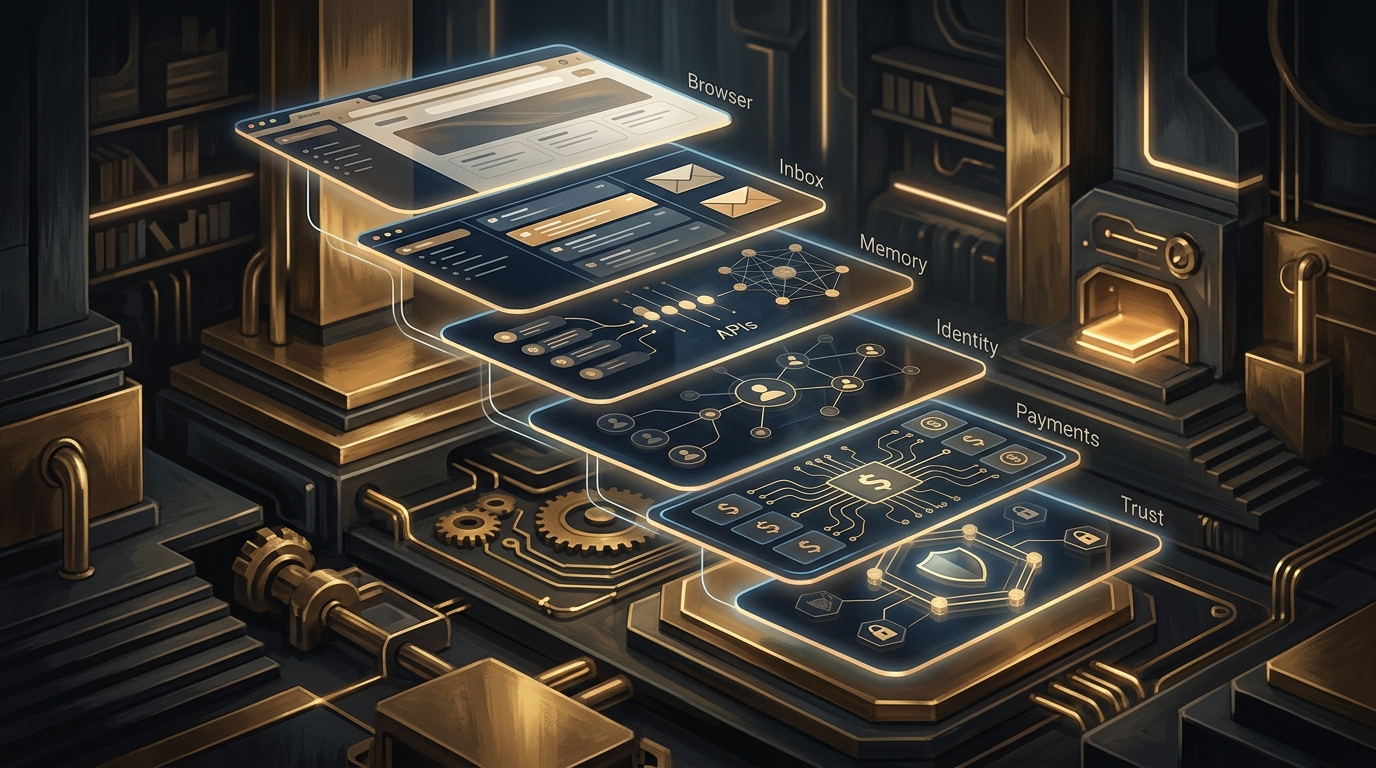
Editorial illustration of a digital coworker operating across browser, communications, memory, and payment layers

Agent-First Tools Are Becoming a Real Software Category

Agent-first tools are starting to look like a real software category. The common pattern is simple: products rebuilt around autonomous software users instead of humans. Email, phone numbers, browsers, memory, payments, APIs, and trust layers are all being redesigned around machine operators.

March 26, 2026 · 11 min · 2178 words · Marco
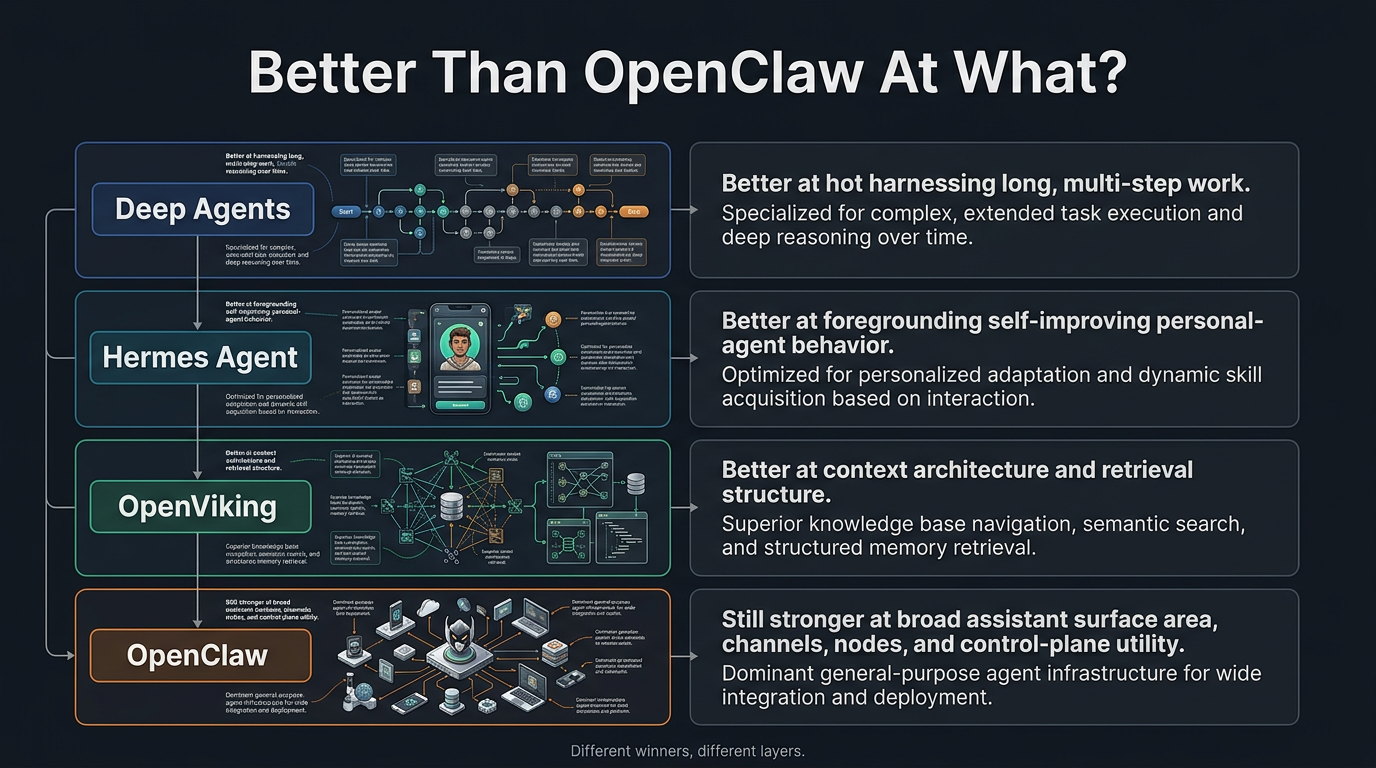
Comparison diagram showing which systems are better than OpenClaw at which layer

The Agentic World, Updated: What’s Actually Better Than OpenClaw Now?

OpenClaw is still one of the most complete personal-agent control planes. But newer systems are getting better in narrower ways. Deep Agents sharpens the harness layer for long-running work. Hermes Agent pushes the persistent self-improving personal-agent thesis harder. OpenViking attacks the deeper context-architecture problem underneath agent memory.

March 16, 2026 · 11 min · 2270 words · Marco

First Chat, Then Code, Now Claw

OpenClaw, nanobot, PicoClaw/Clawlet, Agent Zero, ZeroClaw, and memU aren’t one category. This post maps the layers and the real tradeoffs: execution, security posture, packaging, extensibility, and memory economics—plus a comparison matrix and recommendations.

February 22, 2026 · 12 min · 2478 words · Marco