Editorial illustration of an AI memory architecture with folders, graphs, vectors, and timelines

Agent Memory Systems in 2026: What Actually Matters

Agent memory is no longer one feature. It has split into several design camps: raw recall, profile memory, context filesystems, reflective memory, coding-agent memory, and enterprise context APIs. This guide maps the trade-offs, the real architectures, and the hype gap.

April 16, 2026 · 19 min · 4028 words · Marco
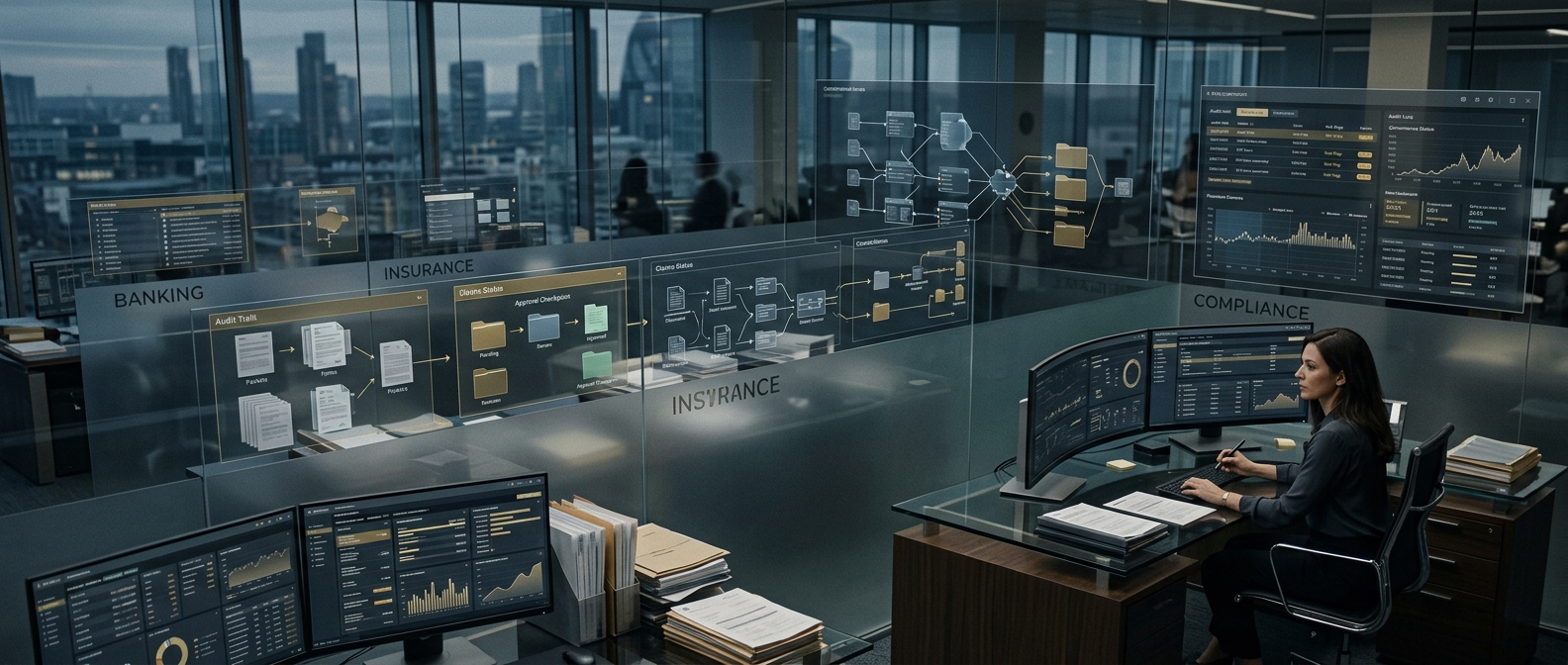
Editorial visualization of bounded AI agents operating inside regulated financial workflows with human oversight, audit trails, and approval checkpoints.

AI Agents in Financial Services: Where They Actually Work in 2026

AI agents are starting to become useful in financial services, but not in the hypey fully autonomous sense. The real wins are in tightly scoped workflows like onboarding, claims intake, compliance review, collections support, and internal operations, where human oversight, audit trails, and system boundaries are explicit.

April 5, 2026 · 9 min · 1800 words · Marco
Editorial illustration of a digital coworker operating across browser, communications, memory, and payment layers

Agent-First Tools Are Becoming a Real Software Category

Agent-first tools are starting to look like a real software category. The common pattern is simple: products rebuilt around autonomous software users instead of humans. Email, phone numbers, browsers, memory, payments, APIs, and trust layers are all being redesigned around machine operators.

March 26, 2026 · 11 min · 2178 words · Marco
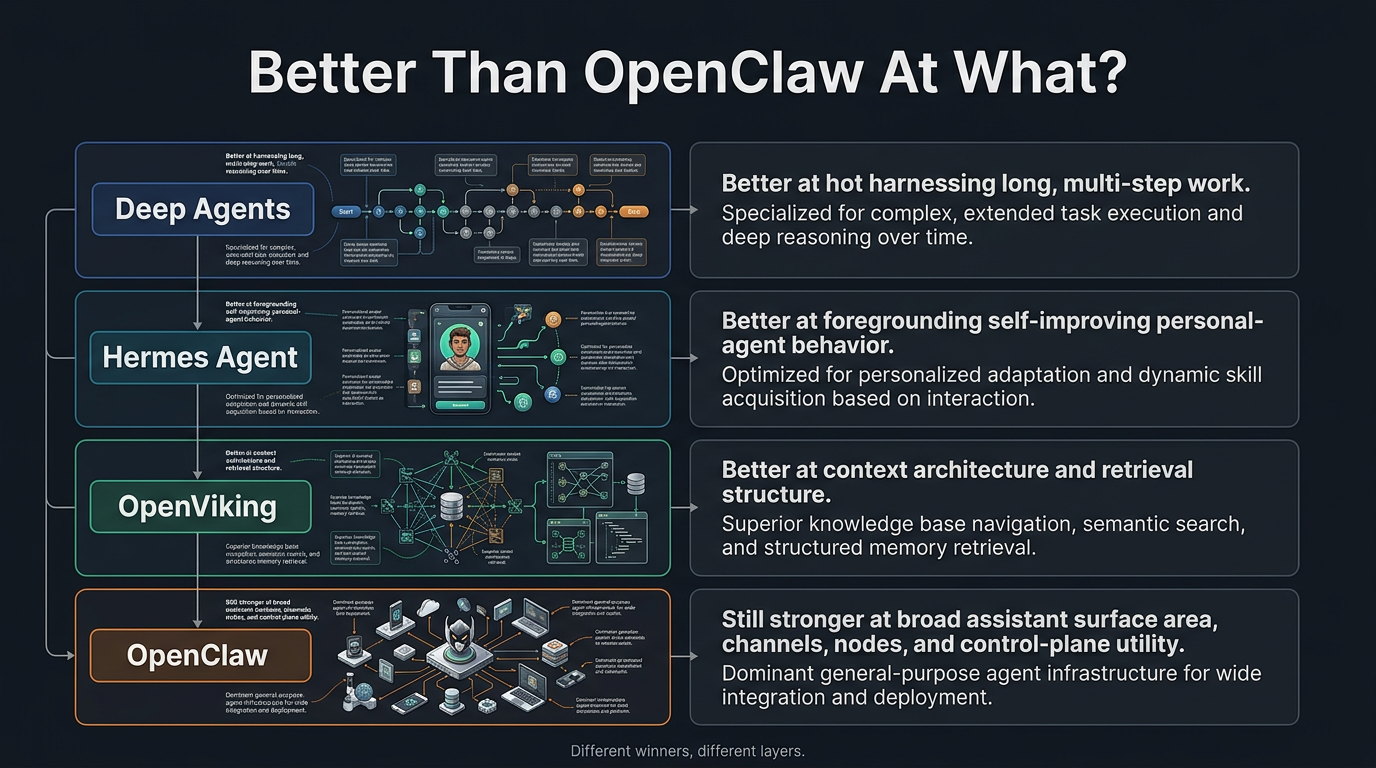
Comparison diagram showing which systems are better than OpenClaw at which layer

The Agentic World, Updated: What’s Actually Better Than OpenClaw Now?

OpenClaw is still one of the most complete personal-agent control planes. But newer systems are getting better in narrower ways. Deep Agents sharpens the harness layer for long-running work. Hermes Agent pushes the persistent self-improving personal-agent thesis harder. OpenViking attacks the deeper context-architecture problem underneath agent memory.

March 16, 2026 · 11 min · 2270 words · Marco
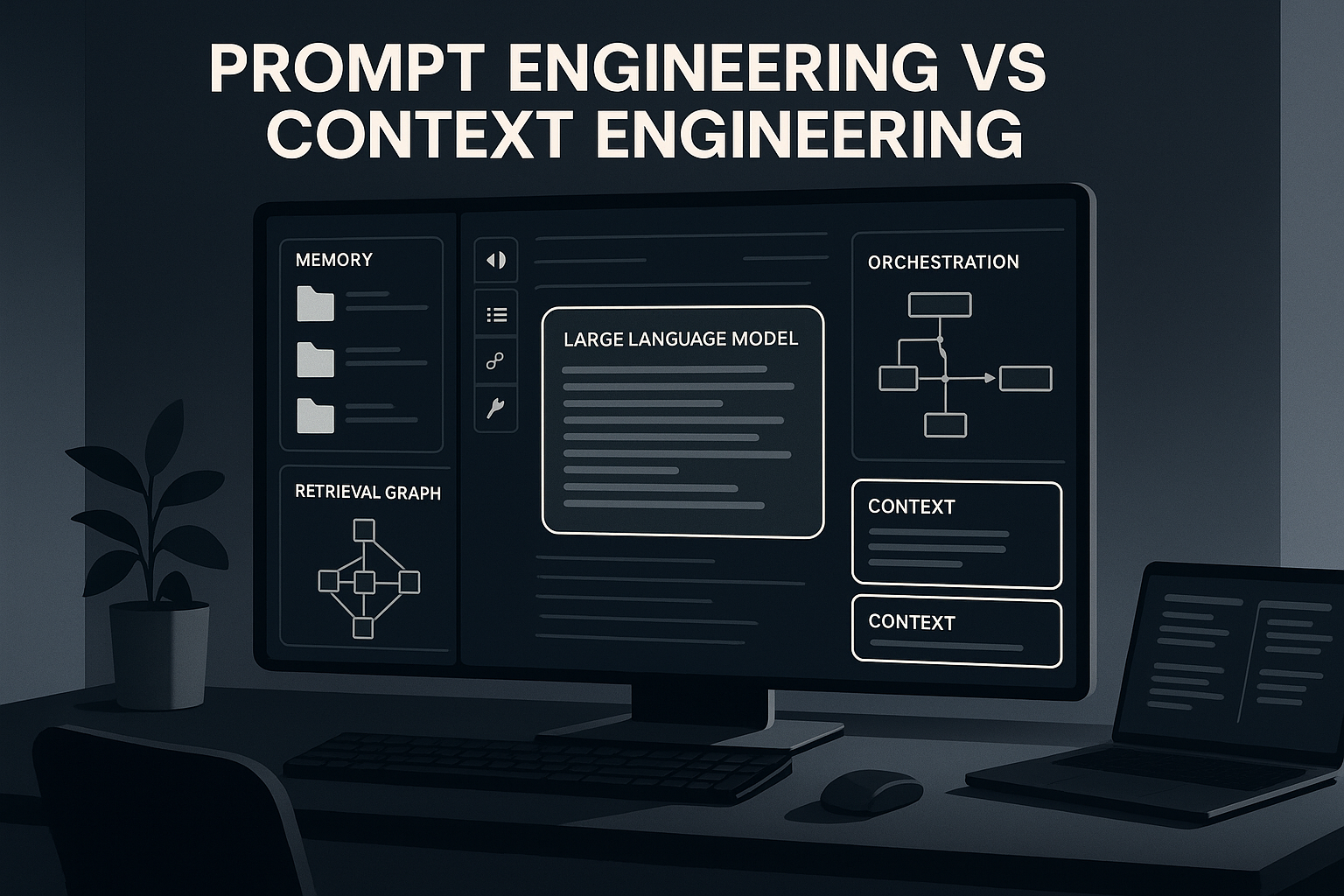
Editorial illustration showing a model operating inside a rich context environment with memory, retrieval, tools, and state

Prompt engineering is getting demoted. Context engineering is the real job now.

Prompt engineering tunes a single interaction. Context engineering designs the information environment across interactions. If you’re building serious AI systems, that’s the difference that matters.

March 11, 2026 · 9 min · 1745 words · Marco

First Chat, Then Code, Now Claw

OpenClaw, nanobot, PicoClaw/Clawlet, Agent Zero, ZeroClaw, and memU aren’t one category. This post maps the layers and the real tradeoffs: execution, security posture, packaging, extensibility, and memory economics—plus a comparison matrix and recommendations.

February 22, 2026 · 12 min · 2478 words · Marco

AI Agent Memory: The Techniques That Actually Work

A practical guide to building persistent memory for AI agents. Learn the techniques that work, the architectures that don’t, and why memory is the bottleneck in modern agentic systems.

February 15, 2026 · 6 min · 1165 words · Marco

OpenClaw Setups That Actually Work (from a Real Reddit Thread)

Most OpenClaw installs do nothing because they’re missing plumbing: channels, tools, permissions, and guardrails. Here are the setups people report as genuinely useful—and how to copy the patterns.

February 10, 2026 · 6 min · 1114 words · Marco
Latency budget pipeline for a voice bot

Voice Bots in 2026: STT + TTS That Actually Ship (Performance-First, Open-Source Where It Counts)

Voice agents aren’t a model demo. They’re a latency + streaming systems problem. Here’s what’s current in STT/TTS (Pipecat, Parakeet MLX, modern TTS), how to evaluate it, and how to ship it without vibes.

February 10, 2026 · 7 min · 1358 words · Marco