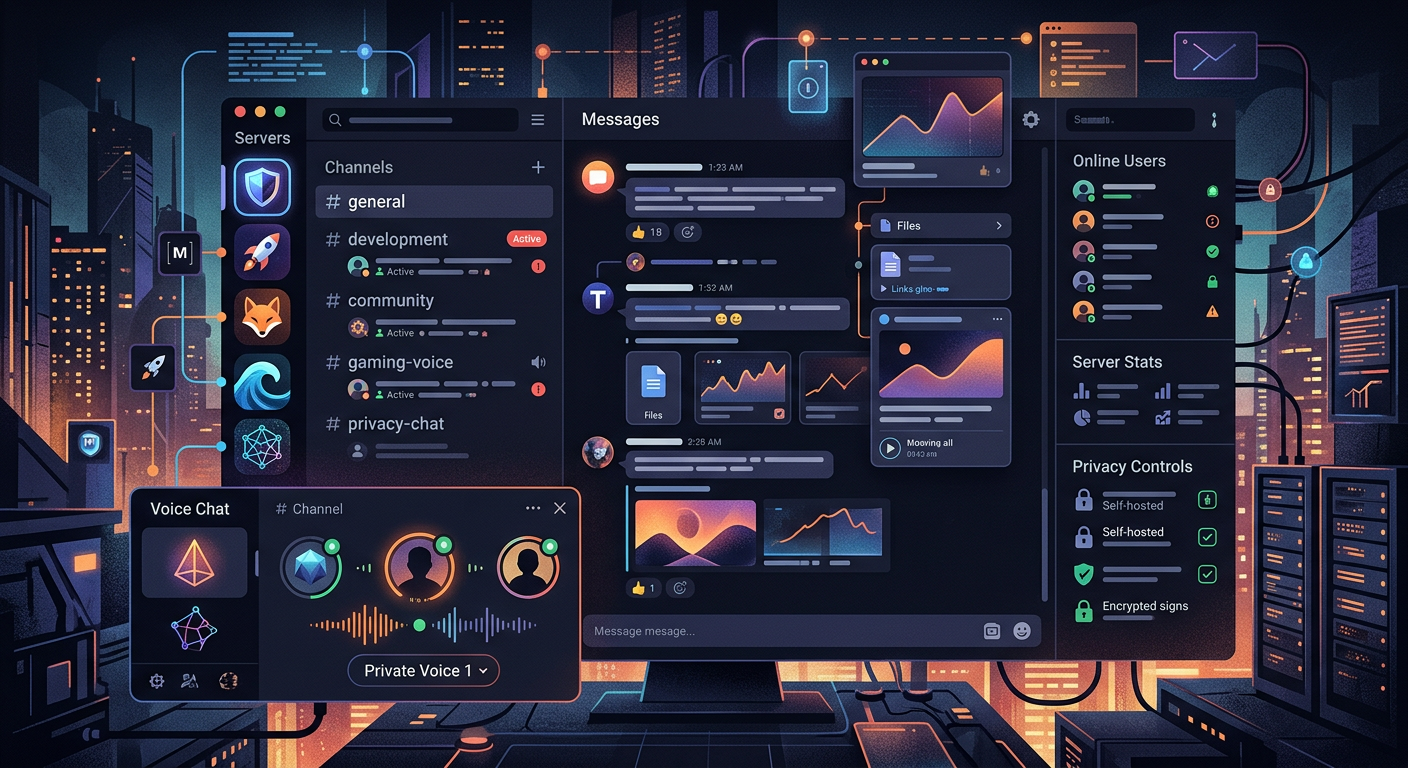
Editorial hero image for self-hosted Discord alternatives

The Best Self-Hosted Discord Alternatives in 2026

If you’re looking for a Discord alternative you can self-host, the answer depends on what you actually need: voice chat, persistent text, moderation controls, forum-style organization, or a UI that feels familiar enough to migrate a community without drama. Here’s the real landscape in 2026.

March 16, 2026 · 13 min · 2746 words · Marco
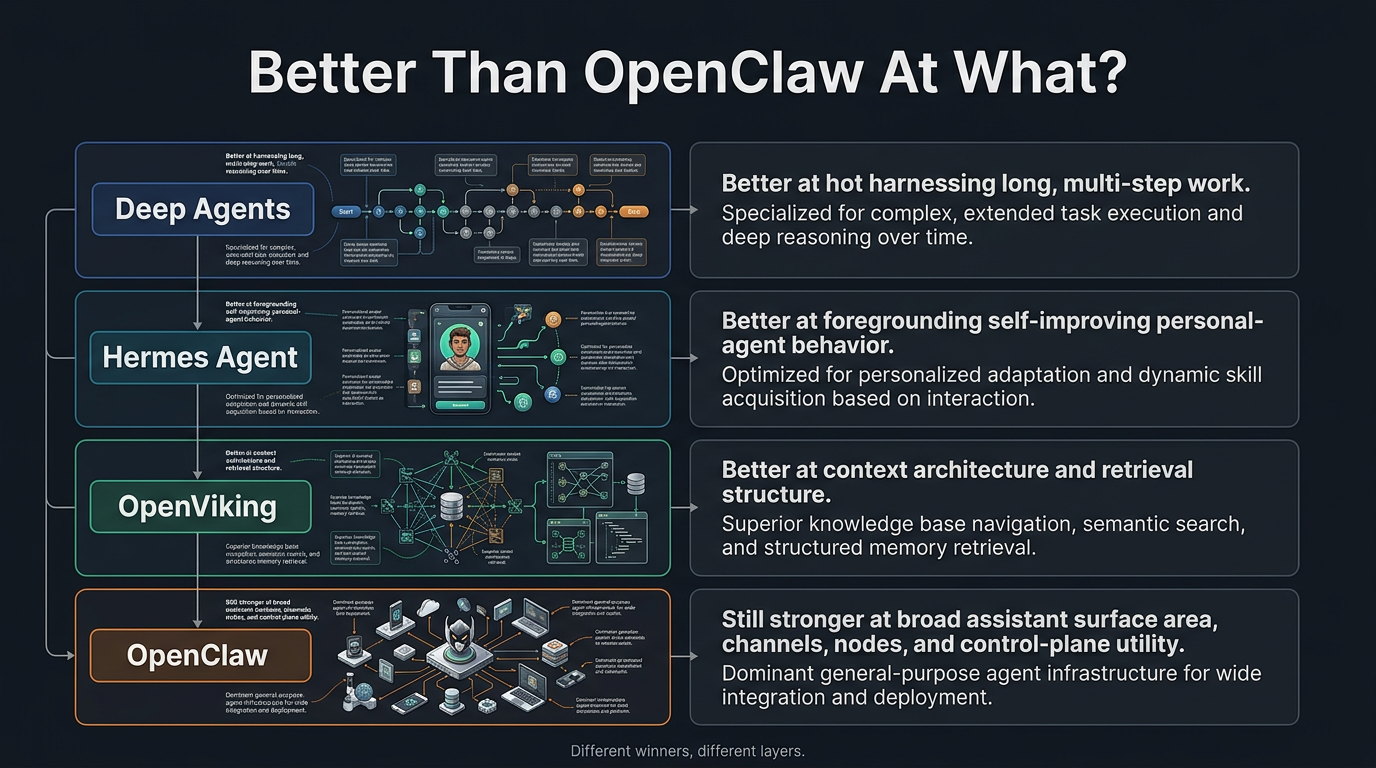
Comparison diagram showing which systems are better than OpenClaw at which layer

The Agentic World, Updated: What’s Actually Better Than OpenClaw Now?

OpenClaw is still one of the most complete personal-agent control planes. But newer systems are getting better in narrower ways. Deep Agents sharpens the harness layer for long-running work. Hermes Agent pushes the persistent self-improving personal-agent thesis harder. OpenViking attacks the deeper context-architecture problem underneath agent memory.

March 16, 2026 · 11 min · 2270 words · Marco
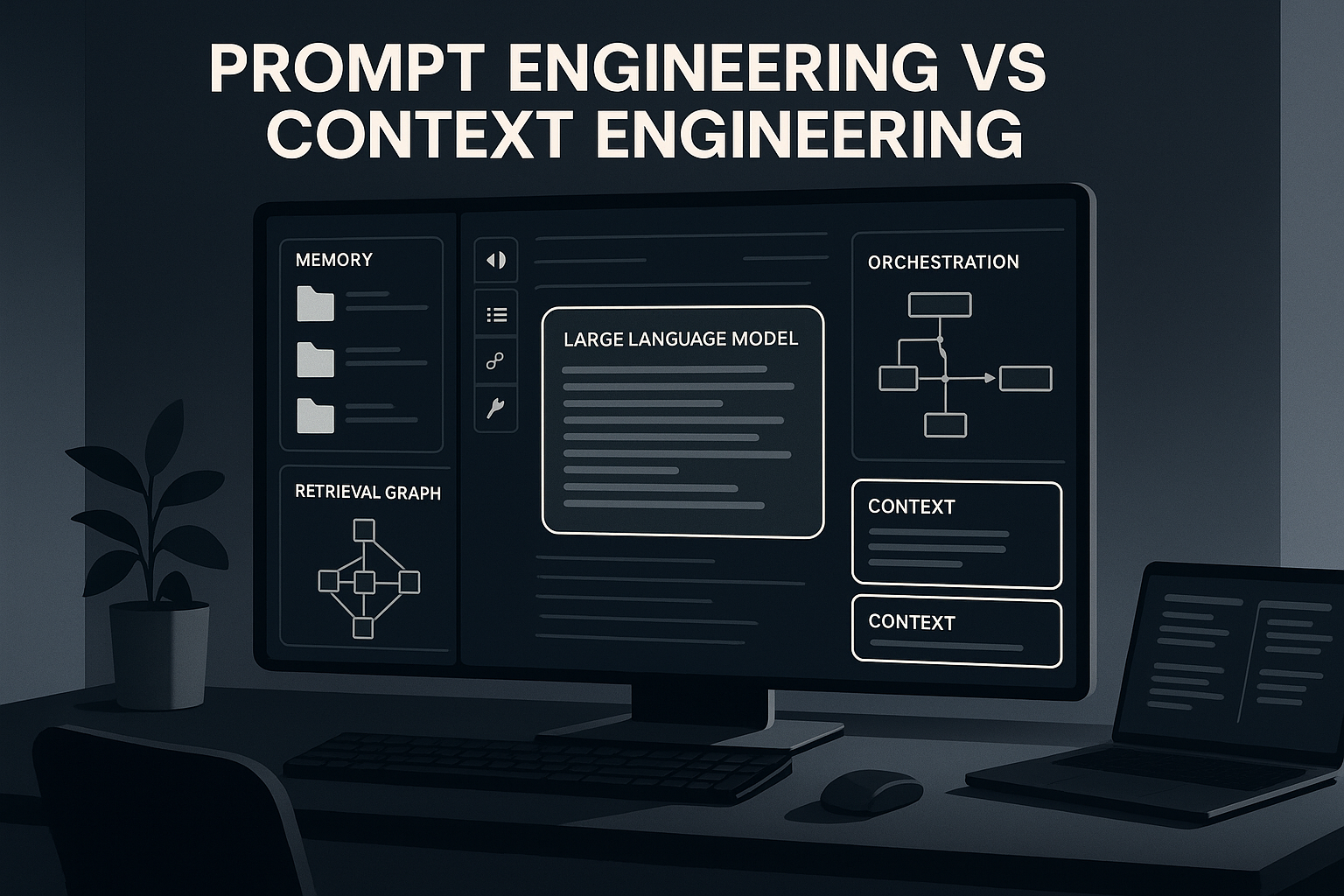
Editorial illustration showing a model operating inside a rich context environment with memory, retrieval, tools, and state

Prompt engineering is getting demoted. Context engineering is the real job now.

Prompt engineering tunes a single interaction. Context engineering designs the information environment across interactions. If you’re building serious AI systems, that’s the difference that matters.

March 11, 2026 · 9 min · 1745 words · Marco

SEO is still alive. AEO is the new surface area (SEO for LLMs).

If you want to show up in LLM answers, you need to be easy to retrieve and easy to quote. This post lays out the new mechanics, the 80/20 tactics, and how to measure what’s working.

March 2, 2026 · 5 min · 948 words · Marco

First Chat, Then Code, Now Claw

OpenClaw, nanobot, PicoClaw/Clawlet, Agent Zero, ZeroClaw, and memU aren’t one category. This post maps the layers and the real tradeoffs: execution, security posture, packaging, extensibility, and memory economics—plus a comparison matrix and recommendations.

February 22, 2026 · 12 min · 2478 words · Marco

AI Agent Memory: The Techniques That Actually Work

A practical guide to building persistent memory for AI agents. Learn the techniques that work, the architectures that don’t, and why memory is the bottleneck in modern agentic systems.

February 15, 2026 · 6 min · 1165 words · Marco

OpenClaw Setups That Actually Work (from a Real Reddit Thread)

Most OpenClaw installs do nothing because they’re missing plumbing: channels, tools, permissions, and guardrails. Here are the setups people report as genuinely useful—and how to copy the patterns.

February 10, 2026 · 6 min · 1114 words · Marco
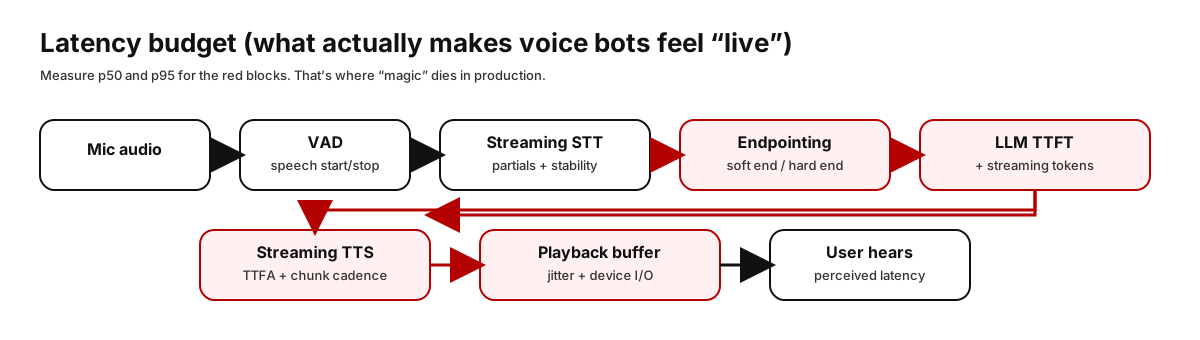
Latency budget pipeline for a voice bot

Voice Bots in 2026: STT + TTS That Actually Ship (Performance-First, Open-Source Where It Counts)

Voice agents aren’t a model demo. They’re a latency + streaming systems problem. Here’s what’s current in STT/TTS (Pipecat, Parakeet MLX, modern TTS), how to evaluate it, and how to ship it without vibes.

February 10, 2026 · 7 min · 1358 words · Marco

OpenClaw’s Next Phase: Moltbook, the Agent Social Graph, and the Rise of Clawdbot-Based Services

Moltbook is the most interesting ‘second-order product’ to come out of the Clawdbot/MoltBot/OpenClaw wave: a social network designed for agents, with a clean API and multi-platform SDKs. It’s also a signal that the ecosystem is maturing into a services layer: skill directories, long-term memory systems, and autonomous GitHub/ops assistants.

February 1, 2026 · 6 min · 1124 words · Marco

The Rise of Clawdbot/MoltBot: How a Viral Personal AI Agent Is Demolishing the Future

A deep dive into the viral personal AI agent that captured the world’s imagination, its technical architecture, serious security vulnerabilities, and the broader trend of agentic AI systems transforming how we work.

January 30, 2026 · 11 min · 2329 words · Marco