First Chat, Then Code, Now Claw
OpenClaw, nanobot, PicoClaw/Clawlet, Agent Zero, ZeroClaw, and memU aren’t one category. This post maps the layers and the real tradeoffs: execution, security posture, packaging, extensibility, and memory economics—plus a comparison matrix and recommendations.
AI Agent Memory: The Techniques That Actually Work
A practical guide to building persistent memory for AI agents. Learn the techniques that work, the architectures that don’t, and why memory is the bottleneck in modern agentic systems.
OpenClaw Setups That Actually Work (from a Real Reddit Thread)
Most OpenClaw installs do nothing because they’re missing plumbing: channels, tools, permissions, and guardrails. Here are the setups people report as genuinely useful—and how to copy the patterns.
Voice Bots in 2026: STT + TTS That Actually Ship (Performance-First, Open-Source Where It Counts)
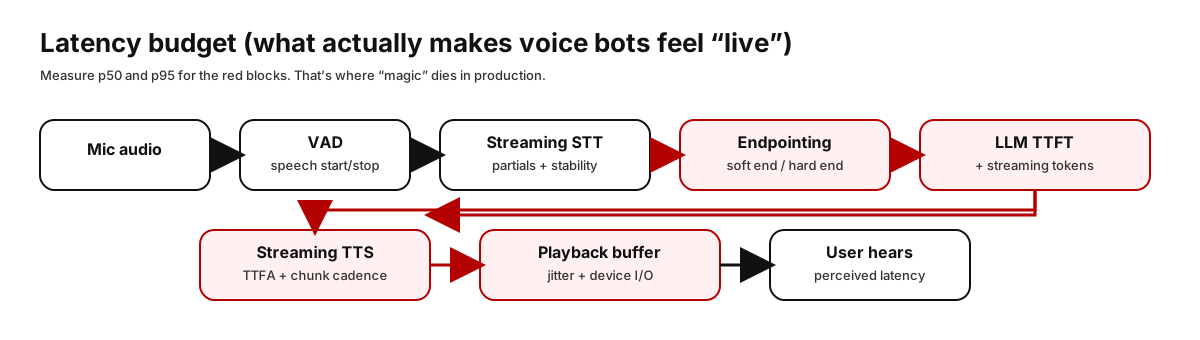
Voice agents aren’t a model demo. They’re a latency + streaming systems problem. Here’s what’s current in STT/TTS (Pipecat, Parakeet MLX, modern TTS), how to evaluate it, and how to ship it without vibes.
OpenClaw’s Next Phase: Moltbook, the Agent Social Graph, and the Rise of Clawdbot-Based Services
Moltbook is the most interesting ‘second-order product’ to come out of the Clawdbot/MoltBot/OpenClaw wave: a social network designed for agents, with a clean API and multi-platform SDKs. It’s also a signal that the ecosystem is maturing into a services layer: skill directories, long-term memory systems, and autonomous GitHub/ops assistants.
The Rise of Clawdbot/MoltBot: How a Viral Personal AI Agent Is Demolishing the Future
A deep dive into the viral personal AI agent that captured the world’s imagination, its technical architecture, serious security vulnerabilities, and the broader trend of agentic AI systems transforming how we work.
Z-Image vs Z-Image Turbo: Complete Comparison Guide
Deep dive into the differences between Z-Image (the full foundation model) and Z-Image Turbo (the distilled 8-step variant). Includes technical specs, community benchmarks, VRAM requirements, and practical usage recommendations.
Daydream Scope: Real-Time Interactive Generative Video Pipelines
Daydream Scope is revolutionizing real-time video AI with interactive pipelines, configurable VAEs, and support for multiple state-of-the-art models. This comprehensive guide covers its features, use cases, and practical implementation strategies.
The Coming Singularity: Why We're Living Through History
An inspiring look at the accelerating progress toward AGI, from Tesla’s robotaxis to recursive self-improvement, and why we’re witnessing a historic transition.
Local LLMs in 2026: Models, Hardware, and Best Practices
Everything you need to know about running local LLMs in 2026: model recommendations, hardware configurations, and practical best practices.